Castelo de Sesimbra
10/02/2009
09/02/2009
Tempo
O infinito que há em nós tem consciência da eternidade da vida; sabe que o presente é só memória do dia de ontem e que o amanhã é sonho do presente; que aquilo que em nós canta e em nós contempla está ainda nos limites daquele primeiro momento que colocaram as estrelas no espaço.
Quem de nós não sente que o seu poder de amar é ilimitado?
Quem não sente que esse autêntico e verdadeiro amor, embora sem limites, e fechado no centro do ser, não se desloca de um sentimento de amor a outro sentimento de amor?
E não é o tempo, como o amor, indivisível e imóvel?
Mar
Mar metade da minha alma é feita de maresia
Pois é pela mesma inquietação e nostalgia,
Que há no vasto clamor de maré cheia,
Que nunca nenhum bem me satisfaz.
E é porque as tuas ondas desfeitas pela areia
Mais fortes se levantam outra vez,
Que após cada queda caminho para a vida,
Por uma nova ilusão entontecida.
E se vou dizendo aos astros o meu mal
E porque também tu revoltado e teatral
Fazes soar a tua dor pelas alturas.
E se antes de tudo odeio e fujo
O que é impuro, profano e sujo,
É só porque as tuas ondas são puras.
Sophia de Mello Breyner Adresen
04/02/2009
Vicky Cristina Barcelona
"Vicky Cristina Barcelona is, ultimately, a very sad film" - Woody Alen
Principled monogamists may not like this film. Not only does it show its primary characters in relationships with multiple partners but, with one exception, they are quite open with each other about it. Allen suggests both that romantic happiness is best achieved with more than one person and that it is necessarily ephemeral (I wonder what his young wife, Soon-Yi Previn, thinks). He says in a Los Angeles Times interview with Rachel Abramowitz that Vicky Cristina Barcelona is, ultimately, "a very sad film."
If so, it may be the brightest sad film ever made. All of the actors are at their best and make immediate connections with the audience. With the exception of an unnecessary voice-over narration (in which Gaudí is mispronounced with stress on the initial syllable), the self-conscious affectations that haunt some of Allen's films are absent. Fine actors are allowed to speak for themselves. According to the Abramowitz interview, Allen "never talked to the actors, other than to give them stage directions." The resulting feel is often one of brilliant improvisation.
The complex romantic relationships among its four primary characters are what the movie's mostly about and I won't spoil it by going into them. Patricia Clarkson, however, deserves mention for her role as July Nash, the middle-aged wife of an American couple who are friends of Vicky's parents and with whom solid Vicky and impetuous Cristina stay in Barcelona (though Cristina soon moves in with the charismatic artist, Juan Antonio). Judy is married to a dull but steady man, somewhat similar to the man that Vicky is about to wed. Vicky confides to Judy about her uncharacteristic fling with Juan Antonio. Judy advises Vicky to reap her passion while she can and arranges another meeting between the two. All of this is low-keyed and entirely believable.
As the movie's title suggests, it's about Barcelona as well as Vicky and Cristina. There are many outdoor shots of the city, especially of Gaudí's Park Güell. They amount to more than a minor travelogue because structures that are usually photographed in isolation appear with everyday crowds of people. Like Bruges in the movie In Bruges, the city is more than scenic background. Though never mentioned explicitly, Barcelona's anarchist past bubbles to the surface.
Há muito tempo que te quero escrever...

"Não há muitas palavras para o amor e por isso, mesmo entre aqueles que se dedicam à escrita, percebe-se muito bem quem são os que sentem mais isto. São os que escrevem menos. As pessoas que amam muito, escrevem pouquíssimo e quando escrevem, normalmente optam por um poema porque é mais pequenito e tem menos palavras. Os poetas amam mais por isto. Olha-se para um poeta e vê-se que o indivíduo sofre para escrever aquilo. Um poeta ama sempre caramba, um escritor só às vezes."
Fernando Alvim
Fernando Alvim
03/02/2009
Get Cape. Wear Cape. Fly - The Chronicles Of a Bohemian Teenager (Part One)
-
I was stuck in minor chords
I'd been here once before
With environmental that goes
By your baggage on my floor.
So get over here,
Lets grab ourselves another beer
Drink until tomorrow to forget that we're still alive.
-
Drinking to forget
Always breaths regrets
Dissolusion faces upon friends that we've seld and met.
I do believe that my
self-constructed alibi
Is cracking under pressure while i'm breaking on the inside
-
I'm sick of making a show
I'm sick of sitting with my
telling people I know
More than they needed to know
And this song is more, than the self indulgant rantings,
closure for the times that have let you down
you know I need you around
-
Well I'm still here, long overdue, but it seems like your.....
-
So this ones for the friends
If not so for themselves
and this new lifes directing us
....
you made us feel at home
broken backs on floors of stone
but I'd rather wake there any day
than wake up here alone.
Portugal em crise desde 1143
A todos os executivos que mantiveram Portugal em crise desde 1143 até hoje, muito obrigado!
Ou estou fortemente enganado (o que sucede, aliás, com uma frequência notável), ou a história de Portugal é decalcada da história de Pedro e o Lobo, com uma pequena alteração: em vez de Pedro e o Lobo, é Pedro e a Crise.
De acordo com os especialistas - e para surpresa de todos os leigos, completamente inconscientes de que tal cenário fosse possível - Portugal está mergulhado numa profunda crise. Ao que parece, 2009 vai ser mesmo complicado. O problema é que 2008 já foi bastante difícil. E, no final de 2006, o empresário Pedro Ferraz da Costa avisava no Diário de Notícias que 2007 não iria ser fácil. O que, evidentemente, se verificou, e nem era assim tão difícil de prever tendo em conta que, em 2006, analistas já detectavam que o País estava em crise.
Em Setembro de 2005, Marques Mendes, então presidente do PSD, desafiou o primeiro-ministro para ir ao Parlamento debater a crise económica. Nada disto era surpreendente na medida em que, de acordo com o Relatório de Estabilidade Financeira do Banco de Portugal, entre 2004 e 2005, o nível de endividamento das famílias portuguesas aumentou de 78% para 84,2% do PIB.
O grande problema de 2004 era um prolongamento da grave crise de 2003, ano em que a economia portuguesa regrediu 0,8% e a ministra das Finanças não teve outro remédio senão voltar a pedir contenção. Pior que 2003, só talvez 2002, que nos deixou, como herança, o maior défice orçamental da Europa, provavelmente em consequência da crise de 2001, na sequência dos ataques terroristas aos Estados Unidos. No entanto, segundo o professor Abel M. Mateus, a economia portuguesa já se encontrava em crise antes do 11 de Setembro.
A verdade é que, tirando aqueles seis meses da década de 90 em que chegaram uns milhões valentes vindos da União Europeia, eu não me lembro de Portugal não estar em crise. Por isso, acredito que a crise do ano que vem seja violenta. Mas creio que, se uma crise quiser mesmo impressionar os portugueses, vai ter de trabalhar a sério. Um crescimento zero, para nós, é amendoins. Pequenas recessões comem os portugueses ao pequeno-almoço. 2009 só assusta esses maricas da Europa que têm andado a crescer acima dos 7 por cento. Quem nunca foi além dos 2%, não está preocupado. É tempo de reconhecer o mérito e agradecer a governos atrás de governos que fizeram tudo o que era possível para não habituar mal os portugueses.
A todos os executivos que mantiveram Portugal em crise desde 1143 até hoje, muito obrigado. Agora, somos o povo da Europa que está mais bem preparado para fazer face às dificuldades.
Ricardo Araújo Pereira
01/02/2009
29/01/2009
Tonight: Franz Ferdinand
All songs written by Franz Ferdinand:
1 - "Ulysses" – 3:13
2 - "Turn It On" – 2:23
3 - "No You Girls" – 3:44
4 - "Send Him Away" – 3:01
5 - "Twilight Omens" – 2:32
6 - "Bite Hard" – 3:31
7 - "What She Came For" – 3:28
8 - "Live Alone" – 3:36
9 - "Can't Stop Feeling" – 3:05
10 - "Lucid Dreams" – 7:57
11 - "Dream Again" – 3:20 12 - "Katherine Kiss Me" – 2:56
"Tintin" por Steven Spielberg
O jornalista mais famoso do planeta, Tintin, está de volta ao Grande Ecrã, desta feita através da realização de Steven Spielberg e produção de Peter Jackson. O filme "Tintin e o Segredo do Unicórnio" é, já à partida, um enorme êxito.
Apesar da estreia ser só em 2011, o filme está muito bem encaminhado. O elenco está escolhido na totalidade. Entre outros vamos poder ver o "Billy Elliot" Jamie Bell como Tintin e o "007" Daniel Craig no papel de Rackham, o mais temido vilão. Sim Pegg e Nick Frost foram os escolhidos para os míticos Dupond e Dupond, e Andy Serkis será o destemido Capitão Haddock.
O filme está já em fase de produção e é baseado na obra de 1943, "O Segredo do Unicórnio" de Hergé. Vai ser rodado em 3D digital com a tecnologia "performance-capture". A parceria entre a Paramount e a Sony está orçamentado em 99 milhões de euros.
28/01/2009
Nacionalismo

O tempo parece não ter melhoras. Verdade! Já repararam há quanto tempo não há um dia em que não chova, em que faça sol todo o dia? Entre chuva, nevoeiro e granizo vale-nos a esperança que a Primavera chegue... e depois o Verão!
Adiante...
Enquanto isso não acontece, enquanto o sol não brilha e as andorinhas não chegam... vamos observar de uma forma mais "nacionalista" o nevoeiro que "paira lá fora".
A crise que todos falam chegou. Com isso, além de todas as questões dos BPP's, BPN's e ETC's, chegou também mais um caso de politiquice que de repetitivo tem tanto quanto o fundo de verdade que lhe confere: o Freeport.
Ninguem se questiona do oportunismo político que uma notícia de corrupção pode ter para o governo de Sócrates a meses das eleições, mas também não há qualquer dúvida que, em bom português, "só pode haver marosca"! Se o Novo Aeroporto demorou quase uma década para ser aprovado, o Freeport demorou... 3 dias?!? Ok, podemos pensar que o ministério do Ambiente do Engº Sócrates funcionava melhor que tudo o resto, ou então não... enfim, a Procuradoria Geral da República certamente sabe como agir (AHAHAHAH!!!).
Do alto de toda a minha experiência económico-política parece-me que "A Crise" já dava título para um belo livrinho. Impossível parece ser negar que esta crise chegou para ficar e que pela sua estadia vai causar uns bons milhões de vítimas qual "Peste" do séc XXI trazida não por ratos em embarcações comerciais, mas por algo muito mais rebuscado: a troca de escudos para euros!
Não duvido que tudo por que estamos a passar se deve à perda do nacionalismo que consistia em levarmos os "nossos" escudos para onde quer que fossemos. A nossa moeda era o nosso patriotismo e assim, pouco dele ficou. Sei eu, sabes tu, sabe a generalidade da minha geração que se não fossem os nossos papás, os nossos vóvós, ou qualquer piedosa família de acolhimento de meia idade e nós, simplesmente, não eramos ninguem. Portugal (sobre)vive cada vez mais à custa dos rendimentos dos nossos pais ou das poupanças dos nossos avós. Aos 23/24/25 anos os nossos pais lutaram contra uma revolução, tinham a vida organizada, uma casa, um emprego, um filho. Aos 23/24/25 anos, os nossos avós viviam numa ditadura ou eram emigrantes e passavam as passas do Algarve para alimentarem toda uma família.
Nós?
Pensávamos ser revolucionários mas não tinhamos causas, quisemos crescer à pressa para agora vivermos de recibos verdes, tentarmos adiar ao máximo as responsabilidades de preencher os papéis do IRS e vivermos com o que o vento trás, e com a palmadinha nas costas que quem nos ama nos dá.
Estamos condenados a voltar ao tempo em que o dinheiro era guardado debaixo do colchão porque perdemos os "escudos", o nosso nacionalismo. Só falta mesmo tirarem-nos o "Português". Sendo que o Acordo Ortográfico já esteve mais longe... o que nos resta?
Pode ser que o nevoeiro traga algo de bom, pode ser que D. Sebastião sempre apareça, quem sabe?
E se aparecer, pode ser que não fuja...
Era uma vez...
"Once upon a time" is a stock phrase that has been used in some form since at least 1380 (according to the Oxford English Dictionary) in storytelling in the English language, and seems to have become a widely accepted convention for opening oral narratives by around 1600.
These stories often then end with "... and they all lived happily ever after", or, originally, "happily until their deaths." These are examples of the narrative form, and occur most frequently in the narratives produced by children aged between 6 and 8.
It is particularly apparent in fairytales for younger children, where it is almost always the opening line of a tale. It was commonly used in the original translations of the stories of Charles Perrault as a translation for the French "il était une fois" and of Hans Christian Andersen, or the Brothers Grimm as a translation for the German "es war einmal" (literally "it was once").
The phrase is also frequently used in oral storytelling, such as retellings of myths, fables, and folklore.
Portuguese: Era uma vez... 'There was, once...' Common ending: "... e viveram felizes para sempre" (... and they lived happily forever)
Spanish: Érase/Había una vez... 'There was, once...' Common ending: ... y vivieron felices y comieron perdices. '...and they lived happy and ate partridges.'
20/01/2009
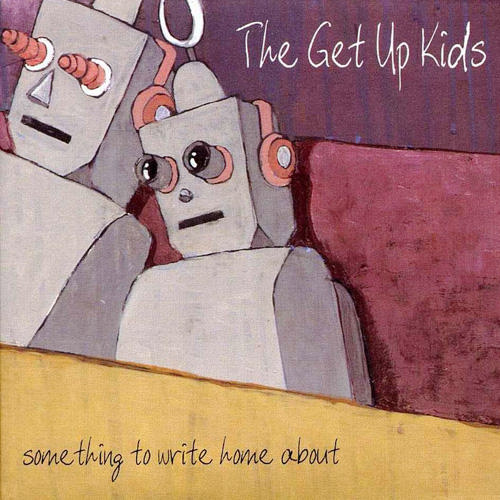
The Get Up Kids - Something to write home about
Something to Write Home About is an emo-indie album by The Get Up Kids, released on September 21, 1999. The album was a financial success, peaking at #31 on Billboards Heatseekers 200 albums chart in North America, and gathered a great amount of critical acclaim. Something to Write Home About is the first Get Up Kids album to include James Dewees playing keyboards.
After The Get Up Kids' previous album, Four Minute Mile brought major label offers, the band decided to stick with an indie label and sign with Vagrant Records for their next album after a short and unproductive time with Mojo Records. Something to Write Home About is, however, slightly more radio-oriented, with catchy choruses and hooks.
Two singles were released to promote this album. The first, Ten Minutes was released through the Sub Pop Singles Club on 7" Vinyl in February 1999. The second, Action & Action was released on March 24, 2000 in Europe on Epitaph Records.
Re-Release
In August 2008, rumors began to spread that that the band will be releasing a special edition of the album in 2009 to commemorate the ten year anniversary of it's release, including a DVD chronicling the band's history. Initially the rumors were fan reports from the farewell Reggie and the Full Effect tour, when lead singer and former Get Up Kids keyboardist James Dewees claimed that the band would re-release the album in addition to touring in the spring of 2009. Speculation was fueled further when, in an interview with Mishmash Magazine, Dewees confirmed that he was working on the reunion of "an old band from the 90's and early 2000's".
The re-release was confirmed by a post on the official music blog of The Kansas City Star that confirmed rumors that the band would be performing a reunion tour in 2009. The tour will be in honor of the tenth anniversary of Something to Write Home About, which remains the band's most successful album to date. The article also included quites from Matt Pryor, who said that Vagrant Records will be re-releasing the album in a special 10th-anniversary edition, including a DVD and photo book.
(click on the title for some emo old times)
19/01/2009
Subscrever:
Mensagens (Atom)